
Thermal Imaging for Bird Watching
Bird watching has traditionally relied on premium daylight binoculars and spotting scopes to reveal feather detail and natural colour. However, many species are active at dawn, dusk, or within habitats where visibility is limited.
Modern thermal imaging devices introduce a complementary capability—detecting birds by their heat signatures, even in low light or complete darkness.
Both thermal monoculars and thermal binoculars can support bird detection, while daylight optics remain essential for detailed observation and reliable species identification.
Thermal vs Daylight Optics for Bird Watching
Traditional Daylight Birding Optics
Daylight optics rely on available light. High-quality glass delivers:
- True colour reproduction.
- Feather and plumage detail.
- Precise species identification when visibility permits.
- A natural viewing experience.
- Clear views of distant birds in suitable conditions.
Explore our:
Daylight & Birding Binoculars
Limitations: Reduced performance at dawn and dusk, obstructed views through foliage, and no capability in complete darkness without illumination.
Thermal Imaging for Detection
Thermal imaging detects temperature differences rather than visible light. It does not show natural feather detail or colour—instead, it helps reveal presence and movement.
- Help detect birds partially exposed through gaps in foliage.
- Operate in total darkness without visible illumination.
- Assist with detection at dawn and dusk.
- Support observation of nocturnal activity.
- Allow monitoring without a visible spotlight.
Thermal imaging cannot see through leaves, branches, or tree trunks. Part of the bird must be exposed to the device. Fog, rain, and high humidity may also reduce image contrast and effective observation distance.
Thermal helps answer: “Is something there?”
Daylight optics help answer: “What species is it?”
Professional Workflow: Combining Both
- Scan habitat using a thermal monocular or binocular.
- Locate a possible bird through its heat signature or movement.
- Note its position using nearby branches or landmarks.
- Switch to daylight binoculars or a spotting scope for identification when lighting permits.
This dual-optic approach can improve search efficiency in wetlands, forest edges, migration corridors, and conservation monitoring.
At night, species identification may remain difficult. Maintain an appropriate distance and avoid disturbing nesting or roosting birds.
Thermal Monoculars for Bird Watching
A thermal monocular is a practical starting point for birders who want a portable device for scanning habitat before switching to daylight binoculars or a spotting scope.
Monoculars are particularly useful for:
- Brief scans during walking and birding outings.
- Locating potential targets at dawn, dusk, or night.
- Carrying alongside existing daylight optics.
- Wildlife surveys where portability is a priority.
Explore our dedicated category:
Shop Thermal Monoculars in Canada
What to Look for in a Birding Thermal Monocular
- Native thermal sensor resolution: Influences the detail available for small targets. Display resolution is a separate specification.
- Field of view: A wider view can make scanning trees and nearby habitat easier.
- Base magnification: Higher magnification may help with distant targets, but a narrower view can make nearby birds harder to locate.
- Minimum focusing distance: Important for birds in nearby branches or vegetation.
- Weight and handling: Relevant when carrying both thermal and daylight optics.
- Battery runtime: Important for longer outings and field surveys.
Small birds and distant targets are more demanding than larger wildlife. Advertised maximum detection distances should therefore not be treated as bird-detection ranges. Digital zoom enlarges the existing image but does not add native sensor detail.
Pulsar Axion Thermal Monoculars
For birders considering a compact handheld device, the Pulsar Axion range is a useful starting point to compare. Check each model’s field of view, sensor resolution, focusing distance, and weight against your typical observation conditions.
Explore:
Pulsar Axion Thermal Monoculars
Pulsar Telos Thermal Monoculars
The Pulsar Telos range provides additional choices for observers considering a larger handheld thermal system. Compare individual models by image detail, field of view, handling, and price rather than advertised detection distance alone.
Explore:
Pulsar Telos Thermal Monoculars
Nocpix Thermal Monoculars
Nocpix offers handheld options including the LUMI and VISTA families. These provide further choices for birders and wildlife observers comparing portability, viewing characteristics, and image detail.
Explore:
Nocpix Thermal Imaging — LUMI, VISTA & Other Options
For broader selection guidance:
Thermal Optics for Wildlife Observation in Canada
Thermal Binoculars for Bird Watching
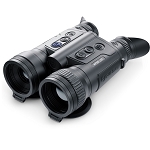
Thermal binoculars allow viewing with both eyes, which some observers find more comfortable during extended sessions. They are worth considering for prolonged observation from a fixed position or regular nighttime wildlife monitoring.
Compared with a compact monocular, binocular systems generally involve more size, weight, and cost. However, exact specifications vary by model.
Explore:
Shop Thermal Binoculars in Canada
For Pulsar options:
Pulsar Thermal Binoculars & Devices
Thermal Monocular vs Thermal Binocular for Birding
The main difference is how you carry and view through the device. Neither format automatically provides better thermal image quality. Detection performance depends on the specific sensor, lens, image processing, and observation conditions.
| Birding Consideration | Thermal Monocular | Thermal Binocular |
|---|---|---|
| Viewing Format | View with one eye. | View with both eyes. |
| Walking and Carrying | Typically easier to carry alongside daylight binoculars. | Typically requires more carrying space. |
| Brief Habitat Scans | Practical for frequent short checks. | Useful, but may involve more handling. |
| Extended Observation | Comfort depends on the user and viewing duration. | Some users prefer two-eye viewing for longer sessions. |
| Budget | Generally offers a lower-cost starting point. | Generally involves a higher initial cost. |
| Small-Bird Detection | Depends on sensor, lens, distance, and conditions. | Also depends on sensor, lens, distance, and conditions. |
| Typical Fit | Mobile birders, guides, and lightweight field kits. | Observers who prioritise two-eye viewing during longer sessions. |
For walking birders who already carry daylight binoculars, a thermal monocular is often the practical first choice. For longer thermal observation sessions, binoculars may justify their additional size and cost through viewing comfort.
Two-eye viewing does not necessarily mean stereoscopic thermal depth perception. Check the optical and sensor design of the specific device.
Daylight Optics vs Thermal Imaging: Key Differences
| Feature | Daylight Optics | Thermal Imaging |
|---|---|---|
| Feather Detail and Natural Colour | Excellent in suitable conditions. | Not reproduced. |
| Species Identification | Primary tool. | Often limited. |
| Low-Light Performance | Depends on available light. | Useful when sufficient thermal contrast exists. |
| Complete Darkness | Requires illumination. | No visible illumination required. |
| Seeing Through Dense Foliage | No. | No. |
| Main Purpose | Identification and detailed observation. | Detection and locating targets. |
Is Thermal Imaging Right for You?
Thermal imaging is worth considering for:
- Regular dawn or dusk birding.
- Wetland or forest monitoring.
- Participation in conservation programs.
- Nocturnal bird observation.
- Structured wildlife surveys.
For casual daytime birding, premium daylight binoculars remain ideal. For habitat monitoring and observation in darkness, thermal imaging adds a useful detection capability.
Choose a thermal monocular when portability and quick scanning are priorities. Consider thermal binoculars when you prefer viewing with both eyes during longer observation sessions.
Browse Thermal Monoculars | Browse Thermal Binoculars
Need Professional Guidance?
Brandon Optics provides guidance for wildlife observation and environmental monitoring applications. We can help select a suitable Pulsar or Nocpix thermal monocular or binocular configuration based on your budget, target wildlife, observation distance, and habitat.
Tagged Products


National & Worldwide Shipping
Shipping rates are calculated at checkout.
30 day Hassle-Free Return and Exchange
Multiple Payment Options
All Debit, Credit Cards, EMT, Wire Transfers
Premium Live Chat/eMail Support
Live Chat or leave a message experts reply within hours.
